Want to be in the loop?
subscribe to
our notification
Business News
AMENDMENTS TO EXPORT AND IMPORT TAX LAW: MORE ADVANTAGES FOR BUSINESSES
At the same time, to comply with the tax reduction commitments in the framework of export taxes under several Free Trade Agreements (FTAs), such as TPP and Vietnam- EU Trade Agreement, the amendment also stipulates: " Goods exported to countries, groups of countries or territories with preferential tax agreement in trade relations with Vietnam comply with these agreements." Thus, the provisions of the Tax Law (as amended) is sorted clearly in line with the trend of the international integration and the commitments relating to export duty to create conditions for the implementation of tariff commitments in which Vietnam is participating.
Additional provisions on tax rates
The Import and Export Tax Law (as amended) adds provisions on the tax rates applied to goods imported from non-tariff zones into the domestic market on the principle
of goods to meet the conditions of origin shall apply tariffs interest corresponding to that origin. Specifically, the preferential tax rates are applicable to the imported
goods originating from the countries or groups of countries or territories that made most favoured nation treatment in trade relations with Vietnam, or goods from non-
tariff areas imports into the domestic market to meet the rules of origin from the country, groups of countries or territories that made most favoured nation treatment in
trade relations with Vietnam. The special preferential tax rates are applicable to imported goods originating from the countries or groups of countries or territories that
have special agreements on preferential import tariffs in trade relations with Vietnam or goods from the zone import tariff on the domestic market to meet the rules of
origin from the country, groups of countries or territories that have special agreements on preferential import tariffs in trade relations with Vietnam.
Besides, the tax regulations are generally amended and supplemented. The current law provisions regulate that the ordinary tax does not exceed 70 per cent of the
preferential tax rate of each corresponding item specified by the Government. Point c, Clause 3, Article 6 of the Law (as amended) regulates that the ordinary tax rates
applicable to goods imported under the circumstances that are not applied to the preferential rates or the special preferential rates above are defined by 150 per cent
compared to the preferential tax rate of each category, respectively.
Not specified export tax brackets
Article 12 of the Law on Export and Import Tax regulated that the National Assembly Standing Committee promulgated the Export Tariff according to the list of taxable
commodity groups and the duty rate bracket for each commodity group, preferential import tariff groups by category taxable goods and preferential tax bracket for each
commodity group, including minimum and maximum levels (hereinafter referred to as the Table frame).
The provisions of the tax bracket, including a minimum (floor) and maximum (ceiling) as last time have promoted positive effects and this is an important basis for the
Prime Minister, Ministry of Finance to issue the export tariffs and preferential import tax rates for each item and respond proactively and timely before the price
fluctuations of the world market, which contributes to stabilising the market prices in the country and in accordance with the specific characteristics of the Tariff.
However, since 2007 when joining the WTO, Vietnam has been committed to 100 per cent of tariff lines at the time of entry and must cut annual commitments under the
road map. At the present, this roadmap has been basically completed. Therefore, the provisions of the maximum ceiling import tax brackets as the current reality do not
make sense. Besides, the floor (minimum) import tariffs also reveal inadequacies so the construction of the floor (minimum) import tax brackets as the current is not
suitable. To overcome, the Law (as amended) and list of the taxable commodity groups are not defined as import and export tax brackets but rather by the minimum
regulations for certain groups of taxable export goods.
Source: VCCI
Related News
VIETNAM ECONOMY INVESTMENT
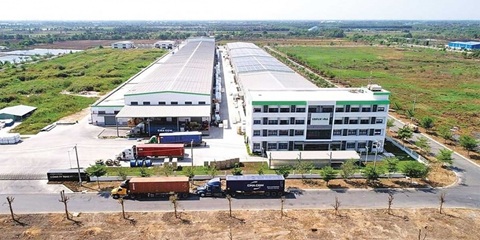
FOREIGN INVESTORS SEEKING A SYNCHRONISED MANUFACTURING ECOSYSTEM
Instead of focusing only on land costs and incentives as usual, foreign investors are seeking a synchronised manufacturing ecosystem, from stable power supply and logistics to shared infrastructure and the convenience of completing residence procedures for experts to serve their long-term investment in the country.
INFRASTRUCTURE / CONSTRUCTION / LOGISTIC / PORT
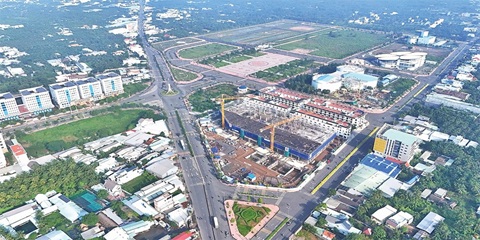
DONG THAP PROVINCE STEPS UP INDUSTRIAL EXPANSION AND INFRASTRUCTURE CONNECTIVITY
Accelerating public investment, strengthening inter-regional connectivity, and expanding industrial land are helping Dong Thap efficiently bolster competitiveness and drive economic growth. Following the 2025 merger of the former Dong Thap and Tien Giang provinces, the expanded Dong Thap province in the Mekong Delta faces mounting pressure to accelerate infrastructure development and strengthen connectivity among local economic zones, urban areas, industrial parks (IPs), and production centres.
PROPERTY / INDUSTRIAL ZONE
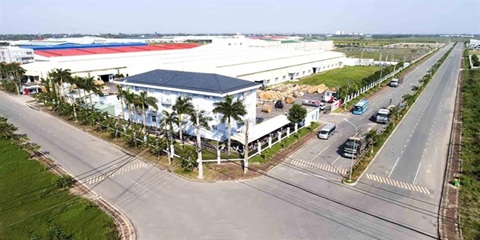
HCM CITY ATTRACTS US$5.7 BILLION INTO EXPORT PROCESSING AND INDUSTRIAL ZONES
HCM City attracted US$5.7 billion in domestic and foreign investment into its export processing and industrial zones during the first nine months of 2026. The figure exceeded the city's full-year target by 31 per cent, highlighting strong momentum in high-quality industrial investment under Resolution No.10-NQ/TW. Total investment reached 131 per cent of the 2026 target of $4.25 billion and represented a 29 per cent increase compared with the same period in 2025, according to the city's Export Processing and Industrial Zones Authority (HEPZA).

BANKING / FINANCE / INSURANCE / TAX
REMITTANCES TO HCM CITY RISE NEARLY 40% IN Q3
Remittances to HCM City reached more than US$2.83 billion in the third quarter of this year, up 39.5 per cent from the previous quarter and 3.6 per cent year-on-year. This was the first quarter showing positive annual growth this year, helping narrow the decline in remittance inflows over the first nine months. According to the State Bank of Vietnam (SBV)’s Regional Branch 2, remittances transferred to HCM City through credit institutions and economic organisations totalled $2.835 billion in Q3, an increase of more than $802 million from the previous quarter.
VIETNAM ECONOMY INVESTMENT
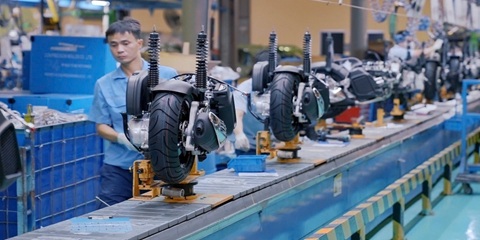
LOCALITIES REPORT BREAKTHROUGH RESULTS IN FDI IN FIRST NINE MONTHS
In Ho Chi Minh City, total registered capital reached $17.2 billion in the first nine months, up 4.2 times from the same period last year. The figure included more than $9.35 billion in newly registered capital and over $4.9 billion in additional capital for existing projects. Foreign investors also registered more than $2.9 billion through capital contributions and share purchases.

TECHNOLOGY
TECH SECTOR GROWTH OPENS UP OPPORTUNITIES FOR VIỆT NAM TO GO GLOBAL
The growth of the electronics, semiconductor and high-tech sectors worldwide is opening up a variety of opportunities for Vietnamese enterprises to integrate more deeply into the global supply chain. However, to become suppliers for these corporations, domestic enterprises must meet rigorous standards regarding quality, technology, productivity and order fulfilment capabilities.
Events Sponsors






















